

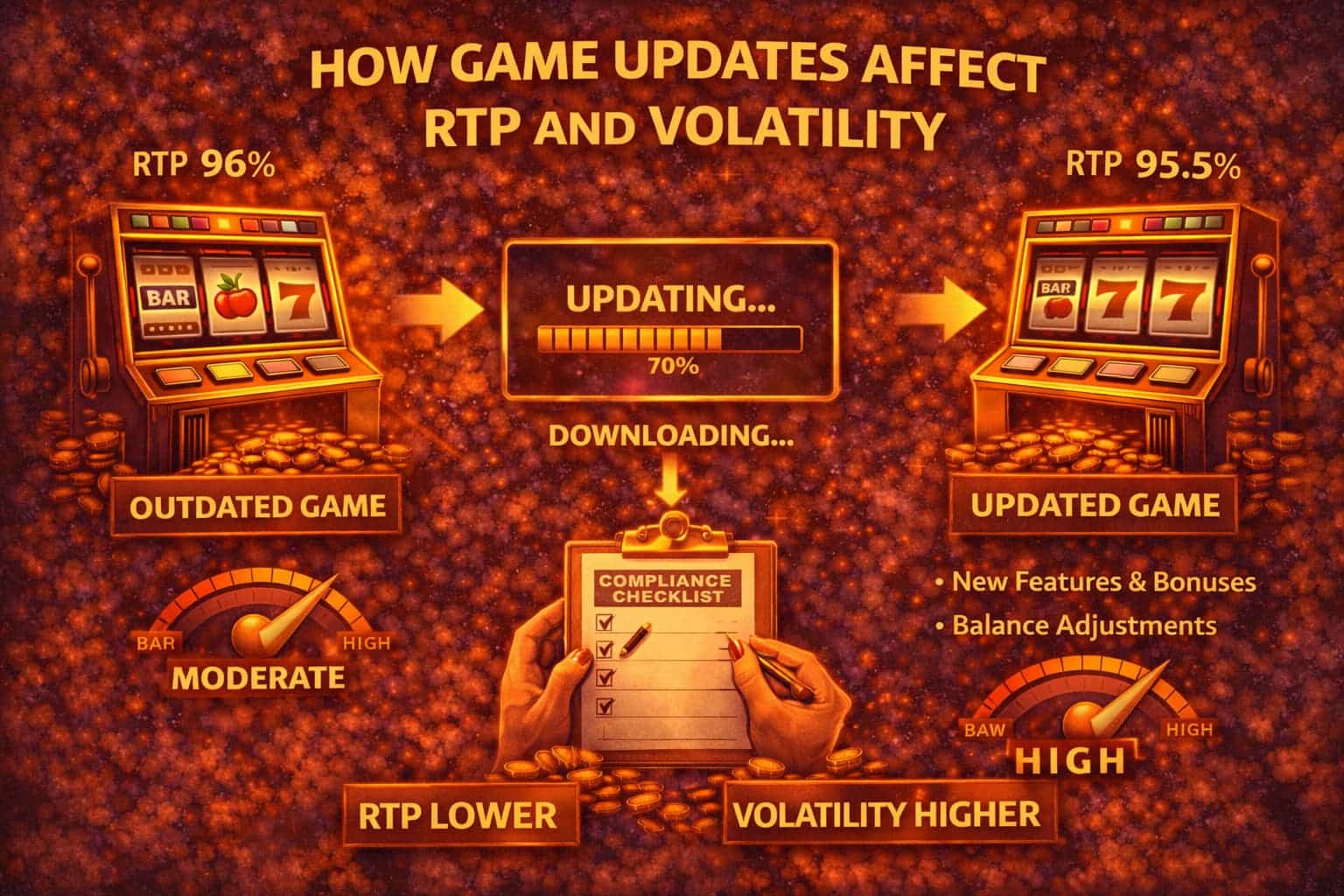
In the fast-paced world of online casino gaming, game updates are a constant, but what exactly do these updates mean for players, especially regarding Return to Player (RTP) and volatility? Unlike many traditional video games where updates often mean new levels, bug fixes, or graphic improvements, online pokie and casino game updates can subtly or significantly impact how often you win and the size of those wins.
RTP and volatility are core mathematical characteristics that define the long-term payout percentage and risk profile of a game. When developers release patches or updates, these metrics may be adjusted to comply with new regulations, fix unintended issues, or rebalance gameplay.
However, many players are unaware that such changes can happen silently, with little fanfare or even transparency. Understanding how updates work, why they happen, and their potential effects can empower players to make smarter choices and recognize when their favorite games have shifted in important ways. This article dives deep into the mechanics behind game updates and what they mean for your gameplay experience.
When Games Are Updated
Game updates in the casino industry occur for a variety of reasons, often reflecting the complex balance of technical, legal, and player experience considerations. Updates can be planned as part of a routine maintenance schedule to improve the stability and performance of the game, fixing bugs or glitches that could otherwise disrupt play or cause errors.
However, beyond these technical necessities, updates also serve to address regulatory compliance, which is crucial in an industry tightly overseen by gaming authorities. For example, a jurisdiction may introduce new rules mandating changes to RTP ranges or volatility caps, prompting developers to adjust their games accordingly.
Additionally, player feedback and data analytics play an increasing role in updates. If a game is deemed too volatile—resulting in too many long losing streaks—or conversely too low-risk, developers might tweak symbol weights or bonus mechanics to strike a better balance, optimizing player engagement and retention. Sometimes, updates introduce entirely new features, like additional bonus rounds or fresh visual effects, to keep a game competitive in a crowded market.
Importantly, these updates can be rolled out globally or regionally depending on licensing agreements and local laws. For example, a slot might be updated in one country but remain unchanged in another. This patchwork rollout means the player experience can vary based on geography, making it important for players to stay aware of their region-specific versions.
Bug Fixes vs Mechanic Changes
While many players think of updates primarily as bug fixes, in the casino gaming space, updates often encompass a wider scope. Bug fixes are generally non-intrusive and focus on repairing technical problems such as freezing screens, payout calculation errors, or graphic anomalies. These fixes enhance stability and user experience without altering the fundamental gameplay mechanics or payout structures.
Meanwhile, mechanical changes can have a profound impact on a game’s performance and player outcomes. These updates may adjust core elements such as paytables, symbol distributions, reel configurations, or bonus feature triggers. For instance, changing the frequency at which a scatter symbol appears might increase the volatility, meaning players may experience longer dry spells but more substantial wins when bonuses hit. Similarly, tweaking symbol values or their weighting on virtual reels can shift the RTP, subtly altering the overall generosity of the game.
Developers use mechanic changes to refine gameplay balance, often based on player data and market trends. A game initially designed with high volatility may alienate casual players, prompting a patch to smooth out variance and attract a broader audience. Conversely, a low-volatility game might be adjusted to appeal to thrill-seekers by introducing higher risk, higher reward features.
For players, distinguishing between harmless bug fixes and impactful mechanic changes can be challenging since updates are rarely announced explicitly. This ambiguity highlights the importance of monitoring gameplay patterns and RTP figures to detect when a game’s behavior has changed.
RTP Adjustments Explained
Return to Player (RTP) is a foundational concept in gambling that represents the expected percentage of wagered money returned to players over an extended period. When games are updated, RTP adjustments might occur for various reasons, including regulatory compliance, technical corrections, or strategic rebalancing by developers.
In some jurisdictions, gaming commissions set minimum RTP limits for online slots and table games. If a provider’s game falls outside these thresholds, an update may be necessary to align with local laws. For example, a game released with a 90% RTP might need to be adjusted to 93% to meet a country’s standards.
Updates may also correct RTP calculation errors discovered post-launch. Since RTP is derived from the probabilities assigned to symbol combinations and bonus events, even minor coding mistakes can skew these calculations. Once identified, patches are issued to fix the math and restore intended fairness.
Strategically, providers might adjust RTP to balance player satisfaction and profitability. Increasing RTP slightly can boost player appeal and session times, while decreasing it may help offset jackpot payouts or promotional costs. However, these changes are often subtle, usually in the range of fractions of a percent, to avoid noticeable disruption.
It’s important to note that RTP is a long-term theoretical value. This means individual sessions may vary dramatically from the average, and players won’t see RTP changes reflected in immediate results. Nonetheless, even minor RTP adjustments impact overall expected returns, influencing the long-term value proposition of a game.
Why Updates Happen Silently
In most software industries, updates are accompanied by detailed patch notes and announcements, but in the online casino world, updates often happen with little or no public notice. This silence is driven by several factors unique to the gambling environment.
Firstly, many updates are considered routine maintenance, similar to backend server updates or security patches that don’t warrant direct player communication. The frequency of these minor changes makes constant announcements impractical.
Secondly, transparency around changes that affect RTP or volatility poses risks for providers. If players know a game’s payout percentages have been lowered, it could lead to backlash, loss of trust, or reduced play. Moreover, revealing exact changes could encourage exploitation or attempts to “game” the system by seeking patterns in symbol weighting or bonus triggers.
Regulatory frameworks require providers to report and document changes internally and often require periodic certification, but they don’t always mandate public disclosure. The priority is maintaining fairness and compliance, rather than detailed player communication.
Finally, preserving the element of surprise and excitement is part of the entertainment value. Players expect some mystery and unpredictability in online pokies and online casino games, and too much transparency risks reducing the thrill of chance.
Provider Patching Processes
Behind every game update is a rigorous process designed to ensure quality, fairness, and compliance. Game providers operate structured patching workflows that start well before players see any changes.
First, developers identify the need for an update—whether to fix bugs, adjust mechanics, or comply with new regulations. Once changes are implemented in the game’s code, they undergo extensive internal testing and quality assurance to verify that the update functions correctly and does not introduce new issues.
Next, the update is submitted to regulatory bodies and independent testing labs such as eCOGRA or GLI, who evaluate the patch to confirm it meets fairness, RTP, and volatility standards. This certification process can be time-consuming but is essential to maintain licenses and player trust.
Once approved, the update is distributed to casino operators, who may deploy it automatically via their platforms or manually install it depending on their systems. Operators also perform additional tests to ensure seamless integration with their websites or apps.
If any issues arise post-deployment, providers have the ability to roll back to previous versions to maintain a stable player experience. Understanding this complex lifecycle helps players appreciate that updates are not arbitrary but subject to careful control and oversight designed to protect their interests.
Player Impact
Players often perceive updates through changes in gameplay experience, whether consciously or subconsciously. Alterations in RTP and volatility can manifest as shifts in how frequently wins occur, the size of payouts, and the triggering of bonus rounds.
For example, increased volatility following an update may lead to longer losing streaks, which can be frustrating for casual players but enticing for those chasing big jackpots. Conversely, lowering volatility might produce smaller, more frequent wins, appealing to low-risk players who prefer steadier gameplay.
RTP reductions, even slight, mean players can expect a marginal decrease in returns over the long term. While this may not be noticeable in a single session, it can influence overall profitability for regular players.
Beyond math, updates that improve graphics, animations, or user interfaces can enhance player enjoyment and session length. On the flip side, poorly communicated changes can lead to mistrust or suspicion of rigging.
Players who remain unaware of updates may mistakenly attribute changed results to luck or “bad runs,” when in fact the underlying mechanics have shifted. By monitoring game performance and RTP disclosures, players can adjust strategies, budget accordingly, or switch to more favorable games.
Transparency Issues
Transparency about game updates, especially those affecting RTP and volatility, remains one of the most debated issues in online gambling. While regulators enforce fairness and mandate RTP disclosures, there is little uniformity regarding how much detail providers must share about updates.
Some operators post patch notes or update logs, but these rarely specify if and how RTP or volatility metrics have been adjusted. This lack of clarity can foster mistrust, with players suspecting changes are designed to disadvantage them.
On the other hand, providers argue that full transparency risks exposing proprietary algorithms and game designs to exploitation, potentially undermining fairness and security. Players increasingly demand more openness, supported by consumer protection advocates who call for clearer communication of material changes affecting gameplay and odds.
The ideal balance may involve regulated disclosure of RTP ranges, update frequencies, and major mechanic changes, providing players with enough information to make informed decisions without compromising game integrity.
What Players Should Watch For
Being proactive helps players stay ahead of unseen game updates. Here are key tips:
- Monitor official casino news: Some operators announce major updates or changes.
- Check RTP info regularly: Many games display RTP on their info screens or provider sites; watch for changes.
- Engage with player forums: Communities often discuss and detect subtle changes before official announcements.
- Notice gameplay shifts: Unusual patterns like longer losing streaks or changes in bonus frequency can signal updates.
- Test in demo mode: After suspected updates, play low-stakes or free versions to observe differences without risk.
- Choose reputable providers: Established developers with strong regulatory compliance offer greater assurance of fairness and controlled updates.
Staying informed and vigilant lets players adjust expectations and strategies, preserving enjoyment and minimizing surprises.
Wrapping It Up: Keeping Your Edge in an Evolving Game World
Game updates are inevitable in the dynamic landscape of online casino gaming. These updates serve important roles—from fixing bugs and complying with regulations to fine-tuning RTP and volatility. While many updates happen quietly, their impact on player experience can be significant.
By understanding why updates occur and how they influence game mechanics, players can approach pokies and table games with greater awareness and confidence. Staying informed, monitoring gameplay changes, and choosing trustworthy providers are key to navigating this ever-evolving world. Ultimately, knowledge is the best tool to maintain your edge and continue enjoying the innovations that make online gambling so captivating.
FAQ
Q: Can game updates make a slot less likely to pay out?
A: Yes, if RTP is lowered or volatility increased, the frequency or size of payouts can decrease. However, these changes are generally small and regulated to ensure fairness.
Q: How do I know if a game has been updated?
A: Updates often happen quietly, but casinos may announce major changes. Player forums and review sites are useful for spotting update rumors or effects.
Q: Are all updates bad for players?
A: Not at all. Many updates fix bugs, improve fairness, or add new features that enhance player experience.
Q: Can casinos update games without regulatory approval?
A: Licensed casinos must get updates approved by regulators to ensure compliance and fairness before release.
Q: Should I stop playing a game after an update?
A: It depends on your comfort with changes. Assess any RTP or gameplay shifts and decide if the game still fits your risk and enjoyment preferences.