

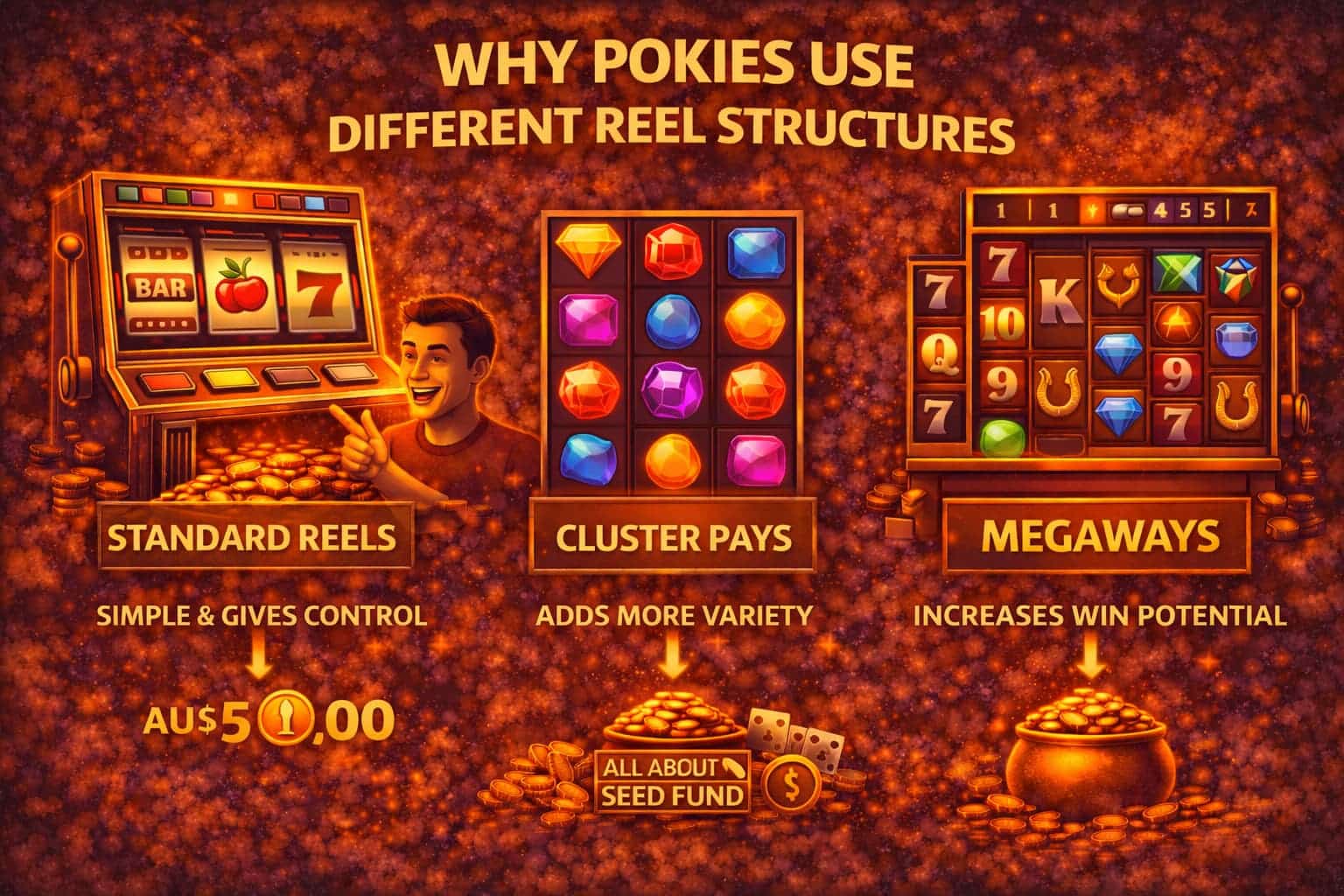
Pokies have captivated players for decades, evolving from simple mechanical machines with a handful of fruity reels to highly sophisticated video slots boasting complex features and stunning graphics. At the heart of these games is the reel structure, a fundamental element that influences the game’s odds, volatility, and overall player experience.
Different reel layouts aren’t just for show—they shape how players engage, how often they win, and the size of their payouts. By exploring why developers use varied reel designs, from virtual reels to symbol weighting, players can gain a clearer understanding of the mechanics behind their favorite games and what drives their enjoyment and challenges.
Virtual Reels Explained
Virtual reels represent a revolutionary shift in slot machine design. Unlike traditional physical reels, virtual reels exist entirely in software and consist of long sequences of numbers that correspond to symbols. When a player spins, the RNG selects a number from these sequences, which then translates into the symbols displayed on the screen. This system allows developers to assign different probabilities to each symbol by varying the number of times they appear on the virtual reel, effectively controlling how often each symbol lands.
This flexibility lets games offer more complex and diverse gameplay than was ever possible with mechanical reels. Virtual reels enable features like bonus triggers, scatter symbols, and dynamic paylines without being limited by physical constraints. This innovation ensures every spin is mathematically fair and random, although the visual reels spinning on the screen are designed primarily for player engagement and suspense.
For players, understanding virtual reels clarifies why outcomes may seem unpredictable yet are governed by strict fairness standards. The virtual reel concept is crucial for grasping the modern pokies blend of chance, design, and entertainment.
Symbol Weighting
Symbol weighting is the secret behind the frequency and size of wins in pokies. Instead of every symbol having an equal chance of appearing, developers assign weights to symbols by placing them multiple times on the virtual reel. For example, common symbols may occupy a large portion of the reel stops, making them frequent but low-value, while jackpot symbols appear only rarely.
This system creates a careful balance between keeping players entertained and maintaining the game’s profitability. Frequent small wins help players feel rewarded and encourage longer play sessions, while the rarer, higher-value symbols sustain excitement and potential for big payouts. The weighting also influences volatility, which describes the level of risk and variability in the game’s returns.
By adjusting symbol weighting, developers can finely tune how often players experience wins and losses, crafting distinct gameplay styles ranging from low-risk, steady games to high-risk, high-reward experiences. This balancing act ensures pokies appeal to a wide variety of player preferences.
Why Reels Aren’t Physical Anymore
The transition from physical to virtual reels has transformed the pokie gaming landscape. Physical reels were limited by their mechanical nature—they could only hold a fixed number of symbols and were prone to wear and maintenance issues. This made it difficult for developers to experiment with complex game mechanics or adjust payouts without physically altering the machine.
Virtual reels, on the other hand, are digital and infinitely flexible. They allow developers to create games with hundreds or thousands of stops on a reel, each assigned a different symbol weight. This flexibility supports innovative gameplay features like cascading reels, multiple paylines, and dynamic bonus rounds, vastly enriching the player experience.
Moreover, virtual reels make it easier to comply with regulatory standards since adjustments to RTP or symbol weights can be done swiftly and transparently in software updates. Players benefit from more immersive, varied, and reliable games, while operators gain efficiency and security. This evolution is a win-win for all involved.
How Reel Layouts Affect Odds
The physical structure of pokie reels—the number of reels and rows—plays a fundamental role in shaping a game’s odds and player experience. Traditional online pokies often featured three reels with three rows, limiting the total number of paylines and combinations, which made gameplay simpler and outcomes easier to predict.
Modern pokies generally have five reels and three rows, creating more paylines, sometimes dozens or even hundreds. More paylines increase the chances of hitting winning combinations on any spin, but these wins tend to be smaller and spread across more combinations, altering the game’s volatility and RTP dynamics.
Some games, like those using the Megaways mechanic, feature variable reel heights with different numbers of symbols per spin, sometimes exceeding 100,000 potential paylines. These layouts significantly increase the unpredictability and excitement but also add complexity in terms of odds and win frequency.
Ultimately, reel layout decisions impact volatility, hit frequency, and player engagement, allowing developers to cater to both risk-averse players and those seeking high stakes and big jackpots.
Visual vs Mathematical Reels
A key concept in understanding video pokies is the distinction between visual reels and mathematical reels. Visual reels are what players see spinning on the screen, they’re designed to create excitement with colorful symbols, smooth animations, and sound effects that simulate the feel of a physical pokie machine.
Mathematical reels, however, are virtual reels that exist in the game’s code and determine the actual probabilities of landing symbols. The RNG chooses a position on these reels to produce outcomes based on symbol weighting and programmed odds. Because of this, visual reels and mathematical reels don’t always correspond directly, visual reels may show certain symbol arrangements for dramatic effect, but the underlying math determines whether those outcomes are likely or rare.
This separation lets developers enhance player experience visually without affecting fairness or randomness. It also means that the player’s emotional response can be influenced independently of the actual game odds, making gameplay more engaging and immersive.
Player Perception Tricks
Pokie developers expertly use psychological tricks to shape how players perceive the game, keeping them engaged and entertained. One common trick is the near miss, where symbols almost line up for a win but fall just short. Near misses stimulate the brain similarly to actual wins, encouraging players to try again.
Additionally, sound and visual effects play a major role. Winning spins might be accompanied by celebratory sounds and flashing lights, while near misses or bonus triggers often include suspenseful audio cues. These sensory effects heighten emotional responses, making wins feel bigger and losses less discouraging.
Variable reel speeds and stopping patterns also manipulate player anticipation. Reels might spin quickly initially, then slow dramatically before stopping, creating suspense. This pacing tricks the brain into heightened focus, increasing excitement even though the outcome is predetermined.
Finally, clustered wins and losses can create perceived streaks of luck or bad luck. These patterns, built into weighted reels, encourage players to continue playing in hope of riding a winning streak or recovering losses.
Common Misunderstandings
Online pokies are hugely popular, but despite their widespread appeal, many players hold mistaken beliefs about how these games actually work. Misunderstandings about the role of chance, the meaning of spinning reels, and player influence can lead to unrealistic expectations and flawed strategies. Clearing up these myths is key to playing smarter and enjoying pokies with a clearer perspective. Here are five of the most common misconceptions about pokie slot games:
You Can Become Skilled or “Beat” Pokies
Some players believe that skill, strategy, or experience can improve their chances of winning at pokies. In reality, pokies are purely luck-based, and no amount of practice or tactics can influence the random outcomes generated by the RNG.
Visual Reels Reflect Actual Odds
The spinning reels you see are mainly for player engagement and don’t exactly mirror the mathematical odds of symbols landing. The visual layout often differs from the virtual reel mechanics driving the real probabilities.
You Can Predict or “Read” the Reels
No matter how closely you watch, the outcome of each spin is determined by the RNG and cannot be predicted or influenced by observing reel patterns or past results.
Pokies Have “Hot” or “Cold” Streaks
Players often believe pokies cycle through winning and losing streaks, but each spin is independent, with no memory of previous outcomes. So “streaks” are just natural random variance.
Players Can Influence Spins or Outcomes
There is no way to affect the result of a spin by timing, bet size, or any other action; every outcome is purely random and controlled by the RNG algorithm.
Why Transparency Is Limited
While players are naturally curious about the inner workings of spokies, game providers limit transparency around reel structures and symbol weights for valid reasons. Firstly, revealing exact symbol weights or virtual reel layouts could allow players to exploit patterns or try to “game” the system, undermining fairness.
Transparency also risks diminishing the excitement and mystery that make pokies appealing. If every detail were known, the thrill of uncertainty could be lost, potentially making the games less enjoyable.
From a regulatory perspective, authorities require proof that games are fair and meet RTP standards but don’t mandate full public disclosure of internal algorithms. This balance protects players while preserving game integrity and entertainment value.
Examples of Popular Pokie Games with Unique Reel Structures
Online pokies aren’t just about spinning reels, they’re about spinning stories, surprises, and sometimes thousands of ways to win! From classic setups to mind-blowing mechanics that change every spin, pokie games come in all shapes and sizes. Let’s take a colorful tour through five iconic titles that showcase just how wildly different reel structures can be. Whether it’s cascading symbols, mega paylines, or cleverly weighted virtual reels, these games prove that the magic really happens under the hood and that every spin can bring something fresh and exciting to the reels!
Starburst (NetEnt)
Using a classic 5×3 reel layout, this pokie incorporates virtual reels with carefully weighted symbols to deliver frequent wins and an accessible RTP of 96.1%. Starburst’s straightforward design, combined with bright visuals and out of this world wilds, has made it a timeless crowd-pleaser.
Bonanza (Big Time Gaming)
Known for revolutionizing pokies with its Megaways mechanic, Bonanza features six reels with a variable number of symbols on each spin, creating up to 117,649 paylines. This unique structure delivers high volatility and dynamic gameplay far beyond traditional fixed paylines.
Mega Moolah (Microgaming)
An icon of progressive jackpots, Mega Moolah adds an extra layer of excitement by integrating weighted jackpots and bonus symbols. The progressive jackpots trigger randomly, balancing thrilling big wins with steady base game payouts.
Gonzo’s Quest (NetEnt)
Replacing spinning reels with avalanche reels, symbols fall into place instead of spinning, enabling cascading wins and multipliers. This innovative setup blends mathematical probability with fresh, engaging visuals for a distinct gaming experience. No wonder Gonzo’s Quest is one of the most popular online pokies going today.
Cleopatra (IGT)
Following a familiar 5×3 layout, it uses virtual reel weighting to maintain compliance with RTP and volatility standards. The game offers a classic pokie experience, enriched by thematic Egyptian design and captivating bonus features.
No Spin: Reel Design Really Does Matter
Pokie games’ varied reel structures are more than just design choices, they are vital components that influence the mathematical fairness, entertainment value, and overall player experience. From virtual reels and symbol weighting to innovative layouts like Megaways, these mechanics ensure online pokies remain exciting, unpredictable, and tailored to different player preferences.
Understanding these elements helps demystify pokies and empowers players to engage with them more knowledgeably, appreciating the blend of chance and design that makes online pokies enduringly popular.
FAQ
Why do pokies have different reel layouts?
Different layouts affect paylines, odds, and volatility, allowing developers to tailor games to various player preferences and risk levels.
Are virtual reels fair?
Yes, virtual reels operate under certified RNG systems tested by independent labs to guarantee randomness and fairness.
Can I predict when a pokie will hit?
No. Each spin is independent and random, making it impossible to predict outcomes based on previous results.
Why don’t casinos reveal exact reel weights?
To protect game integrity and prevent players from exploiting patterns, ensuring fair and unpredictable gameplay.
Do more reels mean better chances to win?
Not necessarily. More reels increase possible combinations and complexity, which can affect volatility but don’t guarantee more frequent wins.